
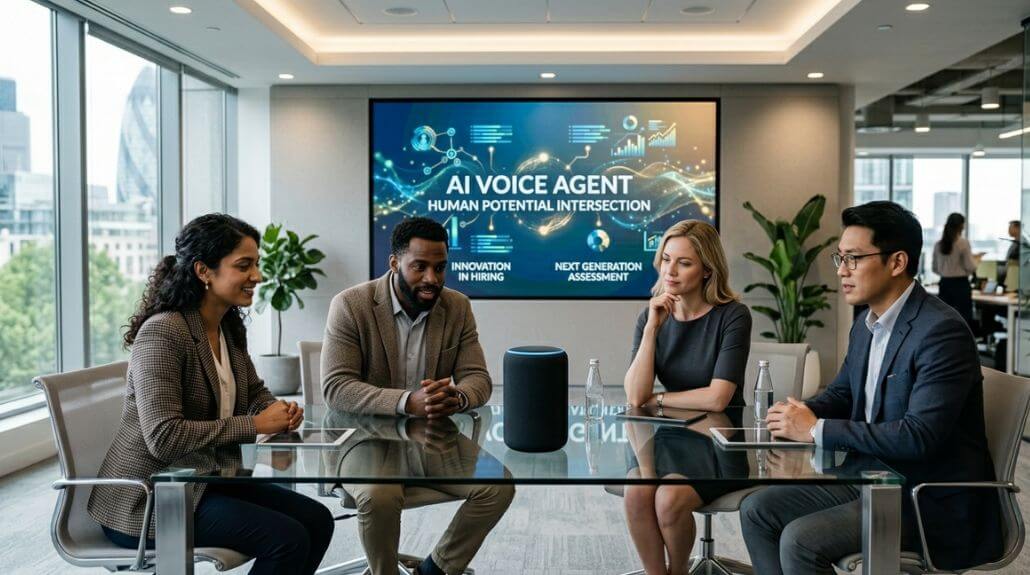
Can AI Voice Agents Interview for Any Job Type?
Can AI voice agents truly interview for any job type? While they excel in evaluating standardised skills, their effectiveness varies across different roles. In positions where emotional intelligence or creativity matters, human judgment often remains crucial. As you consider the implications of AI in hiring, think about how this technology could reshape the recruitment environment and what that means for both candidates and employers.
Short Version
- AI voice agents can conduct preliminary interviews across various job types, streamlining initial assessments and saving time for recruiters.
- They utilise data-driven methods to evaluate skills, making them adaptable for diverse roles, including technical and creative positions.
- Standardised assessments ensure consistent questioning, allowing AI to interview candidates for both entry-level and specialised positions effectively.
- While AI excels in skill assessment, human involvement is crucial for evaluating cultural fit and emotional intelligence in candidates.
- AI’s ability to simulate real-world scenarios makes it suitable for technical roles, but human intuition remains essential for nuanced jobs.
The Evolution of AI Voice Agents in Hiring
As technology advances, AI voice agents have altered the hiring environment in ways we could hardly imagine a decade ago. You might recall a time when interviews relied heavily on face-to-face interactions, but now, these intelligent systems are stepping in to streamline the process.
They’ve evolved from simple automated responses to sophisticated tools capable of engaging candidates in meaningful conversations. Companies can now conduct preliminary interviews at scale, saving time and resources. This shift not only enhances efficiency but also allows hiring teams to focus on more strategic aspects of recruitment, leveraging 24/7 support to ensure a seamless experience for candidates. As you maneuver through this new terrain, it’s essential to understand how these voice agents are reshaping your experience, making it faster and more accessible than ever before.
How AI Voice Agents Assess Candidate Skills
While traditional interviews often rely on human intuition, AI voice agents employ data-driven methods to assess candidate skills effectively. These agents analyse responses based on language patterns, tone, and keyword relevance. When you answer questions, the AI evaluates not just what you say but how you say it. It identifies key competencies relevant to the job, such as problem-solving and adaptability.
Moreover, AI voice agents can administer standardised assessments in real-time, ensuring a consistent evaluation across all candidates. By measuring your skills against established benchmarks, they provide a more objective view of your qualifications. This approach minimises biases that often creep into human assessments, making the hiring process fairer and more efficient for both you and employers. Additionally, the high abandonment rates of traditional methods highlight the need for more effective evaluation tools in recruitment processes.
How AI Evaluates Creativity in Job Interviews?
Although creativity can be subjective and difficult to quantify, AI voice agents employ advanced algorithms to evaluate it during job interviews. They analyse your responses based on various factors, such as originality, problem-solving skills, and the uniqueness of your ideas. By comparing your answers to a vast database of creative responses, the AI can gauge how innovative you are.
Additionally, these agents assess how well you articulate your thoughts and how you connect concepts in unexpected ways. They might even look for emotional intelligence in your delivery, which can indicate creative thinking. Furthermore, personalised interactions can enhance the overall evaluation experience by making candidates feel more engaged and valued during the interview process.
AI’s Role in Assessing Technical Skills?
Evaluating technical skills presents a different set of challenges compared to evaluating creativity. AI voice agents can streamline this process by measuring candidates’ abilities in a structured way.
Here are some ways they can help:
- Standardised assessments: Deliver consistent questions across all candidates.
- Real-time coding tests: Evaluate programming skills through live challenges.
- Problem-solving scenarios: Simulate real-world problems to gauge practical skills.
- Skill-based analytics: Analyse responses to identify strengths and weaknesses.
- Feedback loops: Provide immediate results and suggestions for improvement.
Additionally, AI-driven chatbots can enhance the efficiency of the interview process by providing instant feedback to candidates.
Human Interviewers in an AI Era
As AI voice agents take on more roles in the hiring process, the need for human interviewers remains essential. You can’t underestimate the value of human intuition and empathy during interviews. While AI can assess skills and qualifications, it often lacks the emotional intelligence required to gauge a candidate’s cultural fit or soft skills. You might find that a human interviewer can pick up on non-verbal cues and establish rapport, which are vital for building trust. Furthermore, humans can manage complex conversations and adapt their questioning based on responses, something AI still struggles with. Ultimately, blending AI efficiency with human perspective could create a more balanced and effective hiring process, ensuring candidates feel valued and understood. Additionally, incorporating voice AI can enhance engagement during interviews by fostering deeper emotional connections.
Future Trends in AI Voice Agents for Job Interviews
While many companies are already integrating AI voice agents into their hiring processes, the future promises even more sophisticated advancements. You can expect these trends to shape how interviews unfold:
- Enhanced Personalisation: Customised conversations based on candidate profiles.
- Emotional Intelligence: Better detection of mood and tone to assess candidate fit.
- Multilingual Capabilities: Breaking language barriers for diverse candidate pools.
- Data-Driven Analyses: Analysing responses to improve selection accuracy.
- Continuous Learning: Adapting to trends and feedback for ongoing improvement.
Additionally, as businesses adopt 24/7 voice interaction, candidates will benefit from seamless engagement anytime during the application process.
As these technologies evolve, you’ll find yourself steering through a more efficient and inclusive interview experience. This will make it easier for both employers and candidates to connect meaningfully.
The future of AI voice agents in hiring looks promising!
Conclusion
While some might argue that AI voice agents lack the emotional intelligence needed for certain roles, they actually excel at streamlining the initial assessment process. By efficiently evaluating technical skills and standardising interviews, AI frees up human interviewers to focus on the subtle aspects of candidate fit. This blend of technology and human understanding not only enhances the hiring process but also guarantees that candidates are evaluated fairly and thoroughly across various job types.